
Key Difference: What Protection Do They Offer?
All three meet the highest dust protection rating of 6 (complete dust protection); the difference lies in their water resistance:
· IP65: Resistant to water jets. Withstands water jets from any direction at a flow rate of 12.5 L/min from a 6.3 mm nozzle. Suitable for splash-proof and shower-proof applications. Not suitable for immersion.
· IP67: Resistant to short-term immersion. Can be submerged in water at room temperature to a depth of 1 meter for 30 minutes without water ingress. Suitable for outdoor heavy rain or accidental drops into puddles.
· IP68: Resistant to prolonged immersion. Immersion depth and duration are specified by the manufacturer (typically 2 meters for 24 hours or 1.5 meters for 48 hours). Suitable for environments with prolonged high humidity, condensation, or deep immersion.
Selection Guide
Choose IP65: Suitable for standard workshops, splash-proof workbenches, and general equipment. Offers high cost-effectiveness and meets daily cleaning needs, making it the top choice for most indoor industrial applications.
Choose IP67: Suitable for outdoor, unprotected equipment, food production lines requiring regular foam cleaning, and port machinery. Offers an additional level of submersion protection compared to IP65, but costs approximately 15%–25% more.
Choose IP68: Suitable for ship decks, underwater detection equipment, deep mine shafts, and other environments involving long-term submersion or high condensation. Be sure to verify the manufacturer’s specific test conditions (water depth × duration).
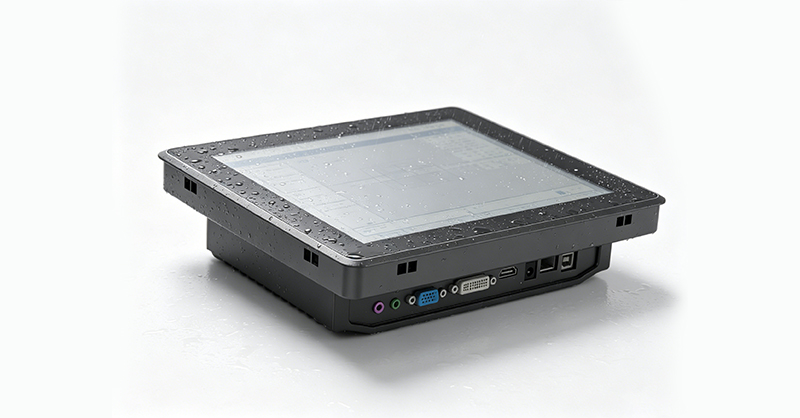
Important Reminder
A higher IP rating is not necessarily better. IP68 provides a tighter seal, which may lead to reduced touch sensitivity, poorer heat dissipation, and difficulty in maintenance. Recommendation: Choose the rating that meets your needs, with one level of redundancy—select IP65 for production line rinsing.