
As a core element of human-computer interaction, touchscreen technology is deeply empowering charging piles to evolve from "single charging devices" to "smart service terminals" by improving user experience, optimizing operational efficiency, and expanding their functional capabilities. The following explains the technical principles, application scenarios, and practical value of touchscreen-enabled charging piles:
The core technology path for touchscreen-enabled charging piles
High-reliability touch hardware: Adaptable to complex outdoor environments
Charging piles must operate stably in temperatures ranging from -30°C to 60°C, rain, snow, dust, and strong electromagnetic interference. Therefore, touchscreens require industrial-grade ruggedization:
Touch technology: Capacitive touch (supporting multi-touch) or infrared touch (with strong anti-interference properties) is preferred to avoid the wear and slow response of resistive touch. For example, Tesla Superchargers use a 10-point capacitive touchscreen, support operation with gloves, and a false touch rate of less than 0.1%.
Protection level: The screen is covered with Corning Gorilla Glass or AG frosted glass, with an IP65 or higher dust and water resistance structure, ensuring normal touch operation even in heavy rain and sandstorms. Anti-electromagnetic interference: Shielding layer design and optimized filter circuits prevent high-frequency currents during charging from interfering with touch signals (for example, the national standard requires that charging piles meet GB/T 18487.1-2023 for electromagnetic compatibility).
Intelligent interactive software: From "functional operation" to "scenario-based services"
Traditional charging piles only provide basic functions such as "start/stop charging." Smart touch screens, through AI algorithms, big data analysis, and Internet of Things (IoT) integration, achieve three major upgrades:
Personalized recommendations: Dynamically recommend the optimal charging plan based on the user's charging history, vehicle battery status (such as SOC), and electricity price fluctuations (such as peak and off-peak prices). For example, after a user plugs in a charging plug, the screen automatically displays: "Current electricity price 0.3 yuan/kWh. Recommend stopping charging after reaching 80%, estimated savings of 5 yuan."
Multimodal interaction: Supports voice commands (such as "Find nearby restaurants"), gestures (such as swiping to switch pages), and QR code scanning (such as payment and points redemption), reducing user learning curve. Remote Operation and Maintenance Interface: Connects to the cloud platform via 4G/5G or Wi-Fi, uploading real-time device status (such as charging module temperature, current and voltage fluctuations) and receiving remote commands (such as firmware upgrades and fault resets). For example, Teladian's maintenance personnel can remotely restart a faulty charging station via a mobile app, reducing the average repair time from two hours to 15 minutes.

The Commercial Touch Screen Monitor empowers three core scenarios for charging stations.
Scenario 1: User Experience Upgrade: From "Passive Charging" to "Proactive Service."
Charging Process Visualization: The screen displays real-time charging power, remaining time, charged capacity, and detailed cost information, and dynamically updates battery health (such as "Battery temperature is normal, charging efficiency is 98%), alleviating user anxiety.
Value-Added Service Integration: While waiting to charge, the screen can push nearby business information (such as coffee shop coupons and parking lot discounts), vehicle maintenance reminders (such as "Tire pressure is low, check recommended"), and charging knowledge (such as "The difference between fast and slow charging") to enhance user stickiness. Accessibility: For elderly users or those with disabilities, features like large font mode, voice announcements, and one-touch customer service are provided. For example, the "senior-friendly version" of Star Charging triples the font size and supports voice interaction in local dialects.
Scenario 2: Improving Operation and Maintenance Efficiency: From "Manual Inspection" to "Predictive Maintenance"
Fault Self-Diagnosis: Built-in sensors on the screen monitor charging module temperature, contactor status, and communication link quality. When an abnormality is detected (e.g., temperature > 85°C), a fault code (e.g., "E001: Charging Module Overheating") is automatically displayed on the screen and simultaneously pushed to the operations and maintenance platform.
Remote Parameter Configuration: Operations and maintenance personnel can modify charging pile parameters (e.g., maximum charging power, payment method, advertising content) via the touchscreen without having to visit the site. For example, the State Grid Corporation of China's charging pile operation platform supports batch parameter distribution, increasing single-time configuration efficiency by 90%.
Energy Consumption Management Optimization: The screen displays real-time charging pile energy consumption data (e.g., daily power consumption and peak-offset power usage ratio), helping operators optimize charging strategies (e.g., adjusting fast charging pile opening hours) and reduce operating costs.
Scenario 3: Business Model Innovation: From "Equipment Leasing" to "Data Monetization"
Advertising Platform: The screen can rotate brand advertisements (e.g., for automakers and insurance companies) and local lifestyle services (e.g., restaurants and gas stations), allowing operators to generate additional revenue through advertising revenue sharing. For example, the click-through rate of on-screen ads for Xiaopeng charging stations reaches 3.2%, generating over 10,000 yuan in monthly revenue for the operator.
Data Service Output: By collecting user charging behavior data (e.g., charging time, location, and power demand), this data can be monetized by providing recommendations for optimizing charging station layouts to city planning departments or forecasting regional power load for power grid companies.
V2G (Vehicle-to-Grid) Interaction Portal: In scenarios where bidirectional charging is supported, the screen can guide users to participate in grid peak shaving (e.g., "Sell vehicle battery power at 0.5 yuan/kWh, estimated profit 20 yuan"), promoting the development of the Energy Internet.
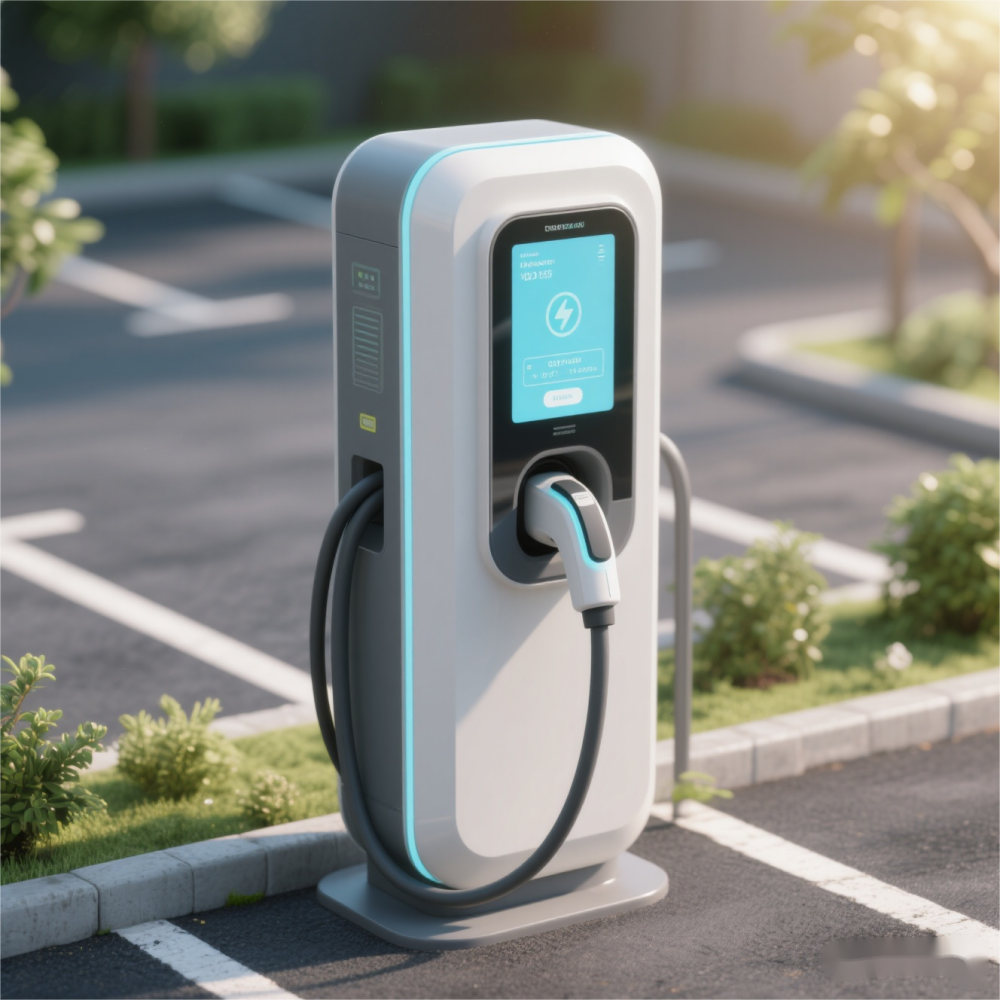
Real-World Case Study: How Touchscreens Are Reshaping the Charging Station Industry
Tesla Superchargers: Building a Closed Ecosystem with Touchscreens
The Tesla V3 Supercharger is equipped with a 15-inch touchscreen. In addition to basic charging functions, it also integrates:
Vehicle Status Monitoring: Displays battery temperature, remaining range, estimated time to full charge, and recommends nearby Supercharging stations;
Entertainment: Users can watch YouTube, Netflix, or play in-car games while charging;
Points Redemption: Users can accumulate points through charging and redeem them for Supercharging credits and vehicle accessory coupons on the screen.
Results: Tesla Superchargers have a 92% customer satisfaction rate, significantly exceeding the industry average of 75%. The average user stay time has increased to 20 minutes (compared to 5 minutes at traditional charging stations), creating opportunities for advertising monetization.